Why put sticky notes on a wall?
A wall gives you something a notebook can't: the whole picture at once. Teams use walls to map projects, students lay out an exam timetable, writers plot chapters, and families track chores — all at a glance and all easy to rearrange.
The challenge is that ordinary sticky notes are designed for paper and desks. Vertical, textured, painted surfaces are harder, which is why notes fall off overnight. Choosing the right type fixes most of that.
Types of wall sticky notes
Extra-strength (super sticky) notes
Normal-sized notes with a stronger adhesive designed for vertical surfaces, walls, glass and monitors. The easiest upgrade if your notes keep falling.
Large-format sticky notes
Big sheets — often 6 × 8 inches and up — that can hold a whole list or a mind-map branch and stay readable from across the room.
Self-stick easel pads
Flip-chart-sized sheets with an adhesive strip at the top. Popular for workshops and classrooms: write during the session, tear off, stick to the wall, repeat.
Sticky wall planners and calendars
Monthly or yearly planners printed on removable adhesive film. Some are dry-erase so you can wipe and reuse them.
Static-cling notes
Sheets that hold on by static electricity instead of glue. They work best on glass, whiteboards and smooth painted walls and leave no residue at all.
Shop wall-friendly options
Live searches — compare sizes and adhesive strength.
How to make sticky notes stay on a wall
- Wipe the wall. Dust is the main enemy. A dry cloth across the area makes an immediate difference.
- Peel correctly. Pull sheets off sideways along the glue strip, not upwards, so they don't curl and stay flat against the wall.
- Press the full glue line firmly with your palm for a second or two.
- Choose smooth surfaces. Matte, textured or freshly painted walls hold less well. A whiteboard, glass door, wardrobe mirror or a sheet of kraft paper taped to the wall is a better base.
- Mind humidity and heat. Notes near AC vents, kitchens or bathrooms dry out or lose grip faster.
Will sticky notes damage painted walls?
Standard repositionable notes very rarely pull paint off a wall that's fully cured. The risk goes up with:
- Fresh paint (less than a few weeks old).
- Cheap or chalky distemper-type finishes, which are common in rented homes and older buildings.
- Extra-strong adhesives left in place for months.
- Pulling notes off quickly or straight outward.
Remove notes slowly, folding them back over themselves at a low angle. If you're worried, test one note in a hidden spot for a few days, or use the paper-backing method above.
Wall layouts that work
- To do / Doing / Done — three columns; move each note across as work progresses. Simple and surprisingly motivating.
- Exam countdown — one note per day until the exam, each with the topic to revise; remove it when done.
- Story or project timeline — a horizontal line of notes in sequence, with colour marking characters, owners or themes.
- Family chore board — a column per person, a note per chore, tick and move.
- Goal wall — a large note per goal with smaller notes for the steps beneath it.
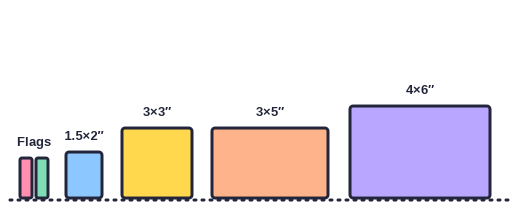
For square notes on a wall, 3 × 3 or 4 × 4 inches is readable at a distance; see the size guide for details.