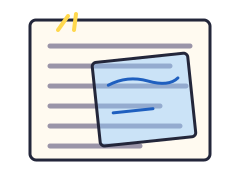
What are transparent sticky notes?
Transparent sticky notes are thin sheets of clear plastic film — usually PET, the same family of plastic used for overhead-projector sheets — with a strip of low-tack adhesive along one edge. Unlike paper notes, you can read whatever is printed underneath them.
That single difference changes how people use them. A paper note is a separate message stuck near the information. A clear note becomes a layer on top of the information: you can circle a word in a textbook, draw an arrow to a diagram label, or write a translation directly above a sentence, and then lift the whole thing away.
Best uses (beyond the obvious)
- Annotating library and second-hand books — the main reason most people buy them.
- Language learning — write the meaning above unfamiliar words while still seeing the original sentence.
- Diagrams and maps — trace a route, label parts of a biology diagram, or add your own arrows without damaging the print.
- Recipe books — note your tweaks (“less sugar”, “bake 5 min longer”) right next to the original quantity.
- Screens and glass — a clear note on a monitor edge or a glass cabinet is less visually loud than a bright paper square.
- Planner overlays — move a tentative plan between days without rewriting it, then commit in pen when it's confirmed.
Which pens work on clear sticky notes?
Plastic film doesn't absorb ink the way paper does, so the pen matters more than the pad. Here's how common pens behave:
| Pen type | Result | Verdict |
|---|---|---|
| Ballpoint | Dries almost instantly, fine line, no smearing | Best everyday choice |
| Oil-based / permanent fine-liner | Crisp and fast-drying; won't rub off | Excellent |
| Gel pen | Bright and smooth but sits on the surface for a few seconds | Good — let it dry before closing the book |
| Fountain pen / liquid ink | Beads up and dries slowly | Avoid unless the pad says it's ink-friendly |
| Water-based highlighter | Streaky, smudges easily | Avoid — highlight the note's border instead |
| Pencil | Barely marks smooth film | Only works on matte/frosted notes |
Lined, plain, tinted or frosted?
Plain clear
The most versatile. Ideal for drawing arrows, circling, and annotating diagrams where lines would get in the way.
Lined clear
Faint printed lines keep handwriting straight — useful for summaries and longer notes. The lines are visible over the page, so they suit text-heavy books better than illustrated ones.
Tinted
A light wash of colour (blue, pink, yellow, green) makes notes easier to spot when you flip through a book, and lets you colour-code: one colour for questions, another for key points, a third for vocabulary.
Frosted / matte
Slightly cloudy film that accepts pencil and many more pen types, at the cost of reduced see-through clarity. A good compromise if you dislike smudges.
Shop by type
Each button opens a live search so you can compare current options and reviews.
Buying checklist
- Adhesive strip width. A wider strip holds better on glossy textbook paper; a narrow strip peels off more easily from delicate pages.
- Sheets per pad and pads per pack. Compare the total number of sheets, not just the pack price.
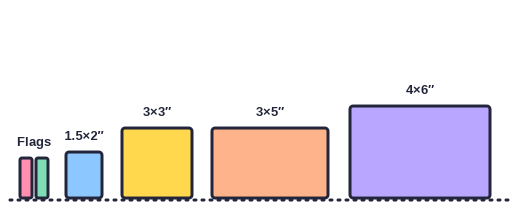
- Size. 3 × 3 inches (about 76 mm, often sold as 75 × 75 mm) is the standard. Smaller tabs are better for marking pages; larger notes suit summaries. See our sticky note size guide.
- Clarity. Reviews that mention “cloudy” or “milky” usually mean the film is less transparent than photos suggest.
- Curling. Thin film can curl at the free edge. Thicker film stays flatter but costs a little more.
- Dispenser or case. Clear notes pick up dust and fingerprints; a pad with a protective cover keeps unused sheets clean.
Tips to make them stick and last
- Peel sideways, not upwards. Pulling the sheet off the pad along the adhesive strip stops it curling.
- Press along the glue line with a fingernail after placing it, especially on glossy paper.
- Store pads flat and away from sunlight and heat, which weaken the adhesive and can warp thin film.
- Remove notes before donating or reselling a book — even low-tack adhesive can leave a faint mark if left on for years.